




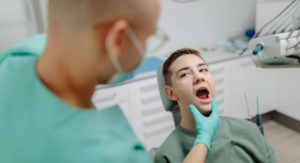
 Jaw pain, headaches, and clicking sounds when your child opens their mouth can be confusing and sometimes concerning for parents. These symptoms may be related to temporomandibular disorders (TMD), a condition affecting the jaw joint and surrounding muscles.

To help families better understand TMJ issues in children and teens, we spoke with Dr. Brendan Squier from the UAB Oral and Maxillofacial Surgery team. Below, he answers common questions about symptoms, causes, diagnosis, and treatment options for TMJ in young patients.
What is TMD and how does it differ from normal jaw discomfort?
Temporomandibular disorders (TMD) describe conditions that cause pain or dysfunction in the jaw muscles or the temporomandibular joint (TMJ)—the joint that connects the lower jaw to the skull.
According to Dr. Squier, TMD can involve muscle-related issues, joint-related problems, or both, and about half of the population experiences symptoms at some point in life.
Common TMD symptoms include:
- Tension headaches
- Popping or clicking sounds in the jaw
- Pain when opening the mouth
- Jaw soreness that worsens with chewing or wide opening
These symptoms differ from other causes of jaw discomfort, such as tooth pain, sinus issues, or ear infections, which originate from different areas.
How do you diagnose TMJ in a child?
Diagnosing TMD usually begins with a clinical exam and a detailed symptom history. During the evaluation, a provider may do the following:
- Check for tenderness in the jaw muscles
- Gently feel the TMJ area for pain or inflammation
- Measure how wide the child can open their mouth
- Listen for joint sounds like clicking or popping
- Watch for jaw deviation during opening
Basic in-office imaging is often performed when evaluating facial pain or TMD symptoms. In some cases, more advanced scans, such as a CT scan or MRI, may be recommended to look more closely at the joint.
What causes TMJ problems in children and teens?
TMJ issues in younger patients can develop for several reasons. Dr. Squier explains that many cases result from chronic stress on the jaw joint or muscles. Common contributing factors include the following:
- Teeth clenching or grinding
- Poor sleep habits
- Stress or psychosocial factors
- Trauma to the jaw or face
- Certain bite issues
While a misaligned bite can increase risk, research has not clearly proven that it always leads to TMJ problems.
What early warning signs might parents overlook?
Many TMJ symptoms improve on their own within a few weeks. However, parents should pay attention to signs that may indicate a developing problem. Early symptoms may include the following:
- Jaw locking
- Difficulty opening the mouth fully
- Clicking or popping sounds in the jaw
- Morning jaw stiffness
- Avoiding hard or chewy foods
- Ear pain without signs of an ear infection
Because children often struggle to describe jaw discomfort, subtle behavioral changes, such as avoiding certain foods, may be the first clue.
When should a parent seek evaluation from a specialist?
If symptoms persist despite home care, it may be time to consult a specialist. Dr. Squier recommends seeking evaluation under certain circumstances:
- Symptoms last longer than six weeks
- Mouth opening becomes progressively limited
- Jaw locking occurs
- Pain interferes with daily activities
Parents should also seek care if their child experiences systemic symptoms, such as rashes, fevers, or other joint pain, which could indicate an autoimmune condition.
What treatments are most effective for TMJ in kids?
Fortunately, most children improve with simple, conservative treatments focused on allowing the jaw to rest. There are several at-home treatment strategies:
 Avoiding hard or chewy foods
- Skipping chewing gum or nail biting
- Gently massaging jaw muscles
- Using heating pads
- Maintaining good posture
- Prioritizing healthy sleep habits
- Taking low-dose anti-inflammatory medications such as Ibuprofen (when recommended by a doctor)
These measures typically need to be followed for several weeks.
If symptoms continue, dentists or specialists may recommend a custom TMJ splint or nightguard, physical therapy, or targeted medications. Dr. Squier notes that custom hard splints made by a dentist often work better than “boil-and-bite” guards from the store, which may sometimes worsen symptoms.
In rare cases where conservative treatments fail, minimally invasive surgical procedures may be considered.
Can orthodontic treatment help TMJ problems?
The relationship between orthodontics and TMJ remains a topic of debate. Research has not clearly shown that orthodontic treatment will cure or worsen TMJ symptoms. However, some patients with bite problems do see improvement once orthodontic treatment corrects their alignment.
Dr. Squier advises parents not to pursue orthodontics solely to treat TMJ pain. Instead, orthodontic treatment should focus on correcting bite alignment or crowding, with potential TMJ improvement as an added benefit.
How can families contact the UAB Oral Surgery team?
Families seeking evaluation for TMJ symptoms can contact the team at UAB Oral Surgery.

Referrals can be sent to omfshoover@uabmc.edu, or parents can call 205-801-7703 to schedule an appointment.
There are three locations:
- UAB Oral Surgery Clinic at the Kirklin Clinic of UAB Hospital
- UAB Oral Surgery Hoover
- UAB Medicine Oral Surgery Inverness
The UAB Oral Surgery team offers specialized care to help children, teens, and adults manage TMJ dysfunction and return to comfortable, pain-free jaw function.