




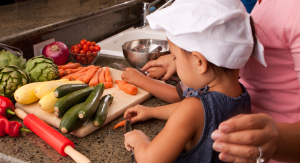
September is National Fruits and Veggies Month, so there is no better time to level up your game when it comes to feeding your children nutritious meals and snacks. The Center for Disease Control reports that on a daily basis, about one third of children do not eat fruit and about half of children do not eat vegetables. There are plenty of fun (and sometimes sneaky) ways to add fruits and vegetables to your family’s diet without breaking the bank and without hearing complaints from your kids.
Recommendations
The USDA recommends that children have the following daily amounts of fruits and vegetables:
- Ages 2-3: 1 cup of fruit and 1 cup of vegetables
- Ages 4-8: 1-1 ½ cups of fruit and 1 ½ cups of vegetables
- Ages 9-18: 1 ½- 2 cups of fruit and 2-3 cups of vegetables
But Why, Mom?
The adult answer is that fruits and vegetables provide important vitamins and nutrients that can help children and adults stay healthy, develop properly, have more energy, and focus better in school and at work. They can lower the risk of heart disease, diabetes, obesity, and some cancers. Teaching your children healthy eating habits now can set them up for success as adults.
The kid answer is that it helps them to be their best at gymnastics, run faster on the soccer field, hit the softball harder and farther, do better on tests in school, and even stay away from the doctor’s office.
How do I get my kids to eat fruits and vegetables?
Fruit Bowls and Veggie Trays
If your children will eat whole, uncooked fruit and veggies, have them available and visible. We always have a bowl with washed apples and bananas on the table, so they can grab and go. If your kiddos will eat raw veggies, stock the fridge with a tray of vegetables they will eat–like carrots, bell pepper, cucumber, celery–and a dip or two. Hummus and salsa are good, healthy options for dips, and ranch is a good cover up for less desired veggies.
To keep costs down, look for produce that is in season. You can also try your local farmer’s market, a local farm where you can pick your own, or grow a few things in your own backyard.
Kids in the Kitchen
Allow your children to pick out a simple recipe, shop for ingredients, chop with these kid-safe knives, and prepare part or all of a meal or snack. If it backfires and they won’t eat their carefully made creation, at least they were exposed to it. You can try it again another time.
Pasta, Burgers, Casseroles, Soups and Chili
Grab your food processor and get ready for your kids to up their veggie intake! Sneak cooked and pureed zucchini, carrots, or eggplant into store bought pasta sauce, and no one will know the difference. You can find noodles made from zucchini, hearts of palm, lentils, or chickpeas. Spaghetti squash is also a nice alternative to regular pasta.
Throw broccoli, cauliflower, or butternut squash into a food processor and add it to your kid’s favorite casserole or mac and cheese.
Puree or grate bell pepper, onion, or carrot and add to ground beef or turkey. The taste doesn’t change much, but my kids call these “Confetti Burgers” because they are fun and colorful, and—as a bonus—packed with good nutrients.
In the colder months, soups and chili are a fantastic way to sneak in vegetables. Your family will barely notice pureed pumpkin or butternut squash in your go-to chili recipe.
Copy-Cat Foods
Take something that your child already likes and change it up a bit. Does your child love french fries? Sweet potato fries in the air fryer are pretty close. If they like those, try carrot or zucchini fries in the air fryer and add ketchup for dipping.
Add grated zucchini or carrots to their favorite muffin mix.
Mix cauliflower in with potatoes to make your kid’s favorite, now healthier, mashed potato recipe. Substitute 1 cup of cauliflower for 1 cup of potatoes.
Work Smarter, Not Harder
Fresh, canned, and frozen fruits and veggies all contain those vitamins and nutrients that you are looking for. Just be sure to watch the added sugar content on canned and frozen fruit and the sodium content on canned vegetables so that you don’t overload your kids on sugar and salt. Stock up on frozen and canned fruits and vegetables when they go on sale to make healthy eating more affordable and easily available.
Smoothies and Popsicles
My kids love a good smoothie, especially when they get to help make it. Start with fresh or frozen fruit, then add a veggie and water or milk. Mine prefer to add a little ice if we are using all fresh ingredients. Veggies that work well with smoothies are spinach, kale, carrots, and butternut squash, but almost anything can work. To make it a meal, add nut butter, avocado, or full fat plain greek yogurt to keep them fuller longer. If your kids need something a little sweeter, add honey or maple syrup.
I love how this blender comes with an option to buy extra smaller cups and lids that are perfect for making smoothies for kids.
Make an extra smoothie and pour into these popsicle molds for the ultimate fruit and veggie snack.
Help your child to be faster, smarter, stronger, and healthier! Just try one small thing to add more fruits and veggies to their diet this week.